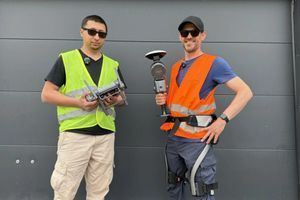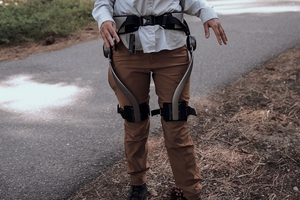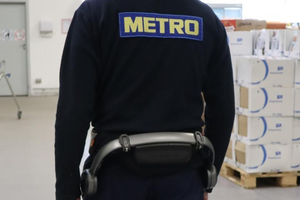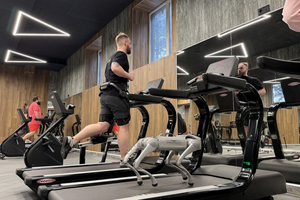
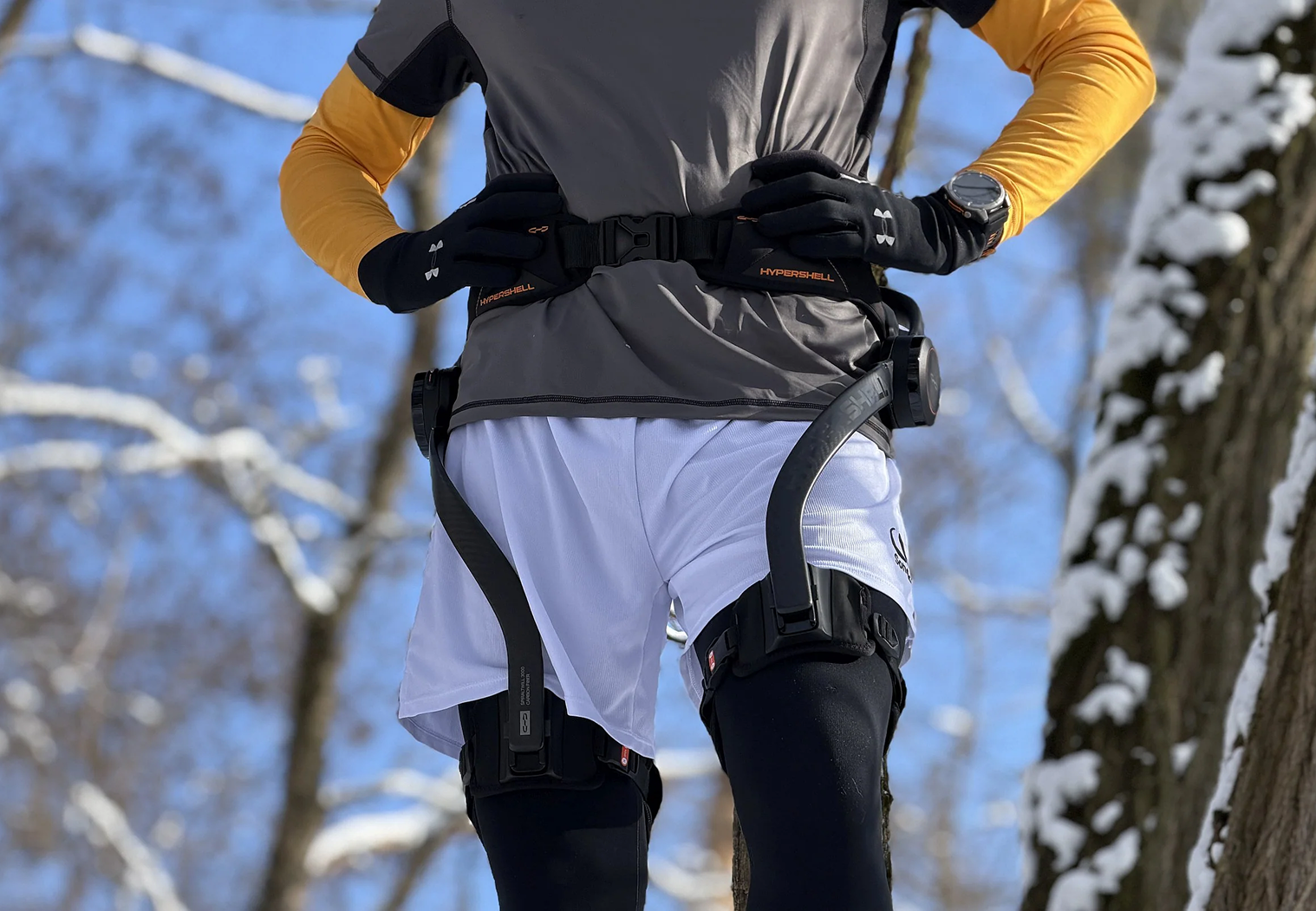
 A pace faster than 3:00 min/km, a heart rate of around 130 bpm, and temperatures of −10°C. These were the conditions in which the Hypershell exoskeleton was tested in Ukraine to evaluate the robotic system during high-intensity running.
The study focused on the relationship between running speed, the runner’s physical effort, and the device’s energy consumption.
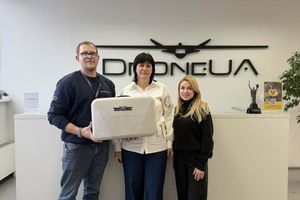
Robotics Distribution — the exclusive Hypershell distributor in Ukraine, ranked among Ukraine’s Top 10 IT distributors and part of the DroneUA group of companies — represents wearable robotics technologies for outdoor activities, sports, and professional use.
Running Test: Conditions and Participant Preparation
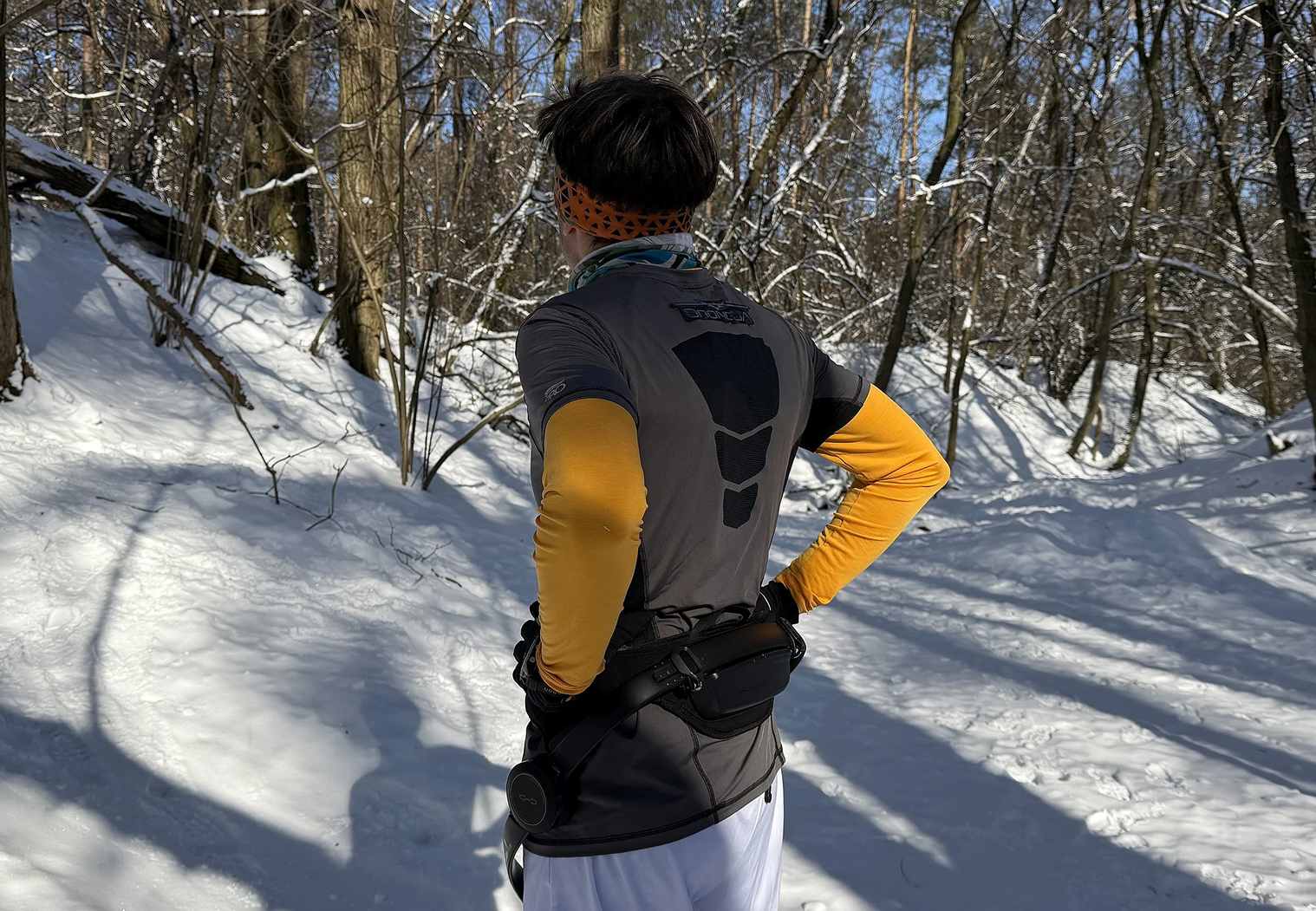
The test was conducted outdoors at a temperature of approximately −10°C. The program included acceleration, high-intensity running, and movement tasks similar to the demands of trail running.
The participant was Ivan Hryhorovych, an experienced runner who regularly covers approximately 50–70 km per week. This level of fitness made it possible to compare running with the exoskeleton against his usual training experience.
A notable aspect of the test was that Hypershell was used at approximately 45% of its maximum assistance level. This made it possible to evaluate the device without using the full potential of its mechanical assistance.
Hypershell Test Results in Numbers
Several indicators were recorded during the test to characterize the exoskeleton’s performance under conditions of intense physical activity.
Pace faster than 3:00 min/km
During acceleration, the runner reached a pace faster than three minutes per kilometer. According to the participant, without the exoskeleton, a similar perceived level of effort would normally correspond to a much more moderate pace of approximately 6:00 min/km.
Heart rate of around 130 bpm
The recorded heart rate was approximately 130 beats per minute. The combination of this heart rate with a high running pace was one of the most notable observations during the test.
16% battery consumption over 2 km
In Hyper mode, the exoskeleton’s battery level decreased by 16% after covering two kilometers. The result was recorded at low temperature and under an intensive operating mode.
These figures reflect the conditions of this specific test. Drawing conclusions about reduced physiological load would require a controlled comparison with running without the exoskeleton under identical conditions.
 The Runner’s Experience: When Speed Outpaces the Usual Perception of Effort
In addition to the numerical data, the participant’s feedback was an important part of the test.
Before the test, Ivan Hryhorovych expected possible discomfort during squats, warm-up exercises, and lateral movements. After the test, however, he identified not discomfort from the equipment but the unusual relationship between running speed and perceived physical effort as the most notable aspect.
Thanks to regular training, the runner is familiar with his own pace and typical physiological response to exercise. With Hypershell, his usual perception of movement intensity became less predictable: the speed was higher than expected based on how the effort felt.
This experience is relevant to understanding how an exoskeleton may affect sports activities. However, a subjective feeling of reduced effort should not be equated with an objectively confirmed reduction in the body’s energy expenditure.
Training Mode: Additional Resistance Instead of Assistance
The test evaluated not only mechanical assistance during running but also Training mode.
Unlike assistance modes, Training mode creates adjustable resistance during movement. This allows the exoskeleton to be used for training activities that require additional physical effort.
Hypershell therefore offers two distinct use scenarios: assistance during movement and controlled resistance.
For sports training, this functionality may be of interest as a way to experiment with different types of physical load. Specific modes and training intensity should be selected according to the user’s physical fitness.
The Practical Value of the Case for the Sports Market
Testing Hypershell outdoors demonstrates the potential of wearable robotics beyond standard gym environments.
For sports clubs, training studios, and specialized retailers, this represents a distinct category of technology that can be introduced to runners, outdoor enthusiasts, and users interested in new approaches to physical activity.
At the same time, professional consultation should clearly distinguish between mechanical assistance, subjective perception of effort, and actual physiological measurements.
For Robotics Distribution partners, Hypershell exoskeletons expand the product portfolio with devices focused on physical activity, sports, and technology-enabled outdoor experiences.
Robotics Distribution invites retailers, online stores, sports equipment suppliers, and specialized technology retailers to partner with the company.
Apply for dealership and receive individual partnership terms from the Robotics Distribution team: https://docs.google.com/forms/d/e/1FAIpQLSedx1T87kvREM1IKtaH7eNfKbtpJlxltc07WyzZNwZ5IjFujQ/viewform
See the video case study to find out what acceleration with the exoskeleton looks like, what the measurements show, and how the runner describes the experience: