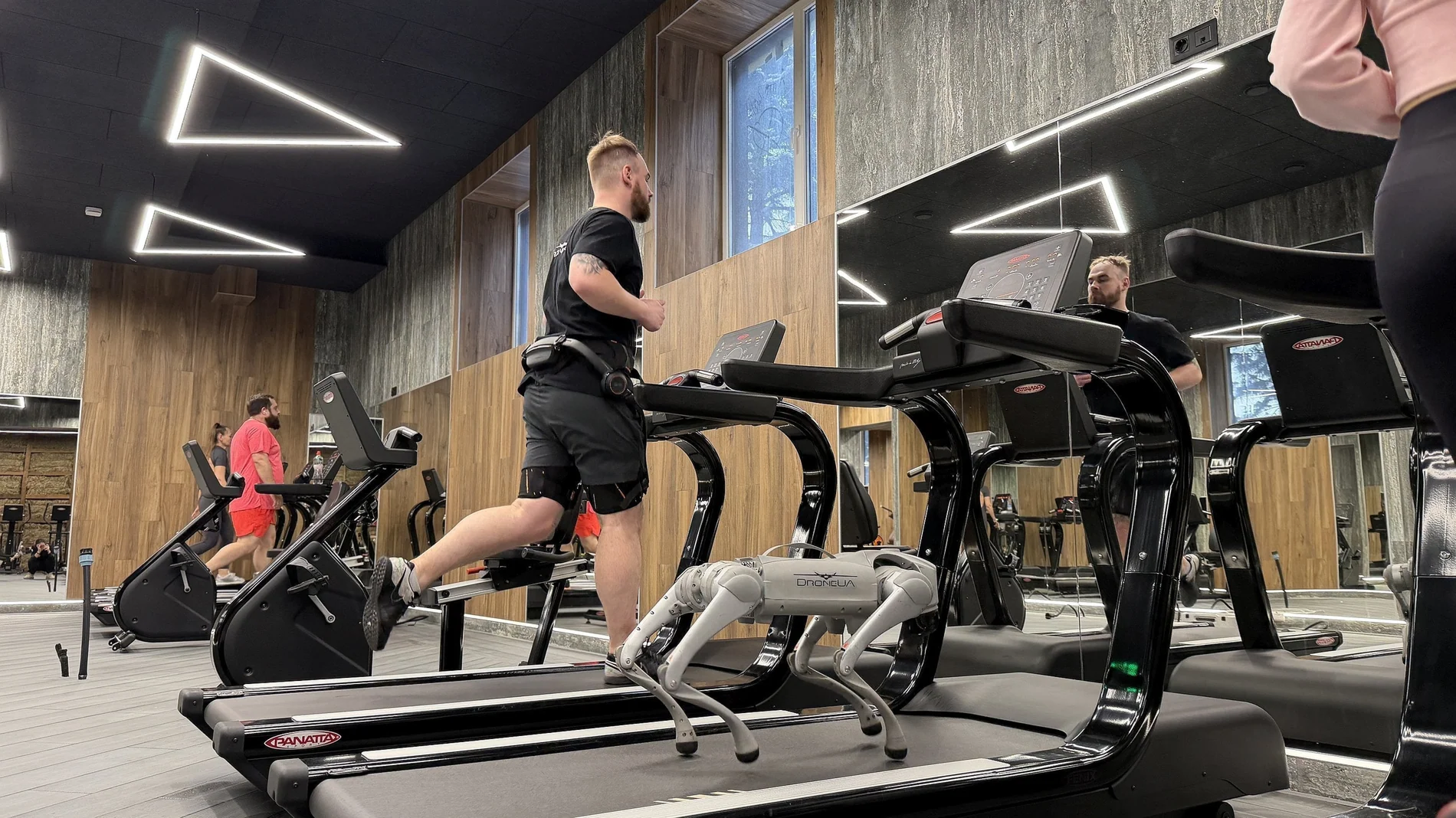
 Can you maintain a higher running pace without experiencing a proportional increase in physical strain? Practical testing of the Hypershell exoskeleton in a gym made it possible to compare two scenarios during a standard cardio workout — without additional equipment and with robotic assistance.
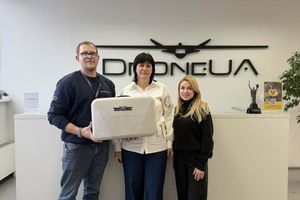
Robotics Distribution — the exclusive Hypershell distributor in Ukraine, ranked among Ukraine’s Top 10 IT distributors and part of the DroneUA group of companies — represents wearable robotics technologies for active lifestyles and professional use. Testing Hypershell on a treadmill demonstrated how mechanical assistance can affect the perceived level of physical exertion during a workout.
Testing Conditions: 10 Minutes on a Treadmill
A standard cardio block before strength training was selected for the comparison — 10 minutes of running.
Without the exoskeleton, the participant started at 8 km/h and gradually increased the pace to 10–11 km/h. By the end of the warm-up, fatigue was already noticeable.
With Hypershell, the nature of the workout changed: the participant maintained a speed of 11 km/h for most of the session and, after adapting to the exoskeleton, increased the pace to 12.5 km/h.
The test showed a difference in the running pace that could be maintained under the two conditions, although additional measurements using the same protocol would be required for a full comparison of physiological load.
Results: Speed, Heart Rate, and Perceived Endurance
Three notable results were recorded during the test:
- Running speed. Without the exoskeleton, the pace gradually increased from 8 to 10–11 km/h. With Hypershell, the participant maintained 11 km/h for most of the session and reached 12.5 km/h.
- Heart rate. After 10 minutes of running with the exoskeleton, the participant’s heart rate was 121–122 bpm.
- Perceived fatigue. According to the participant’s personal assessment, there was still enough energy to run for another 5–10 minutes after the test.
The most notable result was the combination of a higher pace and a subjective sense of preserved physical capacity. This is relevant to the training process because cardio warm-ups typically precede the main exercises, which also require energy.
At the same time, these figures reflect the individual experience of a single participant. They do not demonstrate a universal increase in endurance or reduction in physiological load for all users.
The Practical Value of Hypershell for Physical Training
Hypershell exoskeletons feature a mechanical movement support system that complements the user’s own effort during walking and running.
The gym test highlights several potential applications for this type of equipment: maintaining a target pace, experimenting with cardio duration, and comparing the perceived difficulty of exercises under different modes.
For sports clubs and fitness studios, Hypershell may represent a distinct technology category for demonstration sessions and introducing clients to wearable robotics. For coaches and physical training specialists, such testing provides an opportunity to explore the technology’s capabilities, but does not replace assessment of running technique, health status, or individualized training load.
From a commercial perspective, this also expands the potential audience for Hypershell: in addition to outdoor and active-lifestyle users, the technology may be of interest to specialized sporting goods retailers, technology retailers, and fitness-industry solution providers.
Partnership with Robotics Distribution
Robotics Distribution invites retailers, online stores, specialized sports equipment and technology retailers, and companies interested in developing Hypershell exoskeleton sales to partner with the company.
Apply for dealership and receive individual partnership terms from the Robotics Distribution team: https://docs.google.com/forms/d/e/1FAIpQLSedx1T87kvREM1IKtaH7eNfKbtpJlxltc07WyzZNwZ5IjFujQ/viewform
The video presents a comparison of running speed, post-workout metrics, and the participant’s feedback: